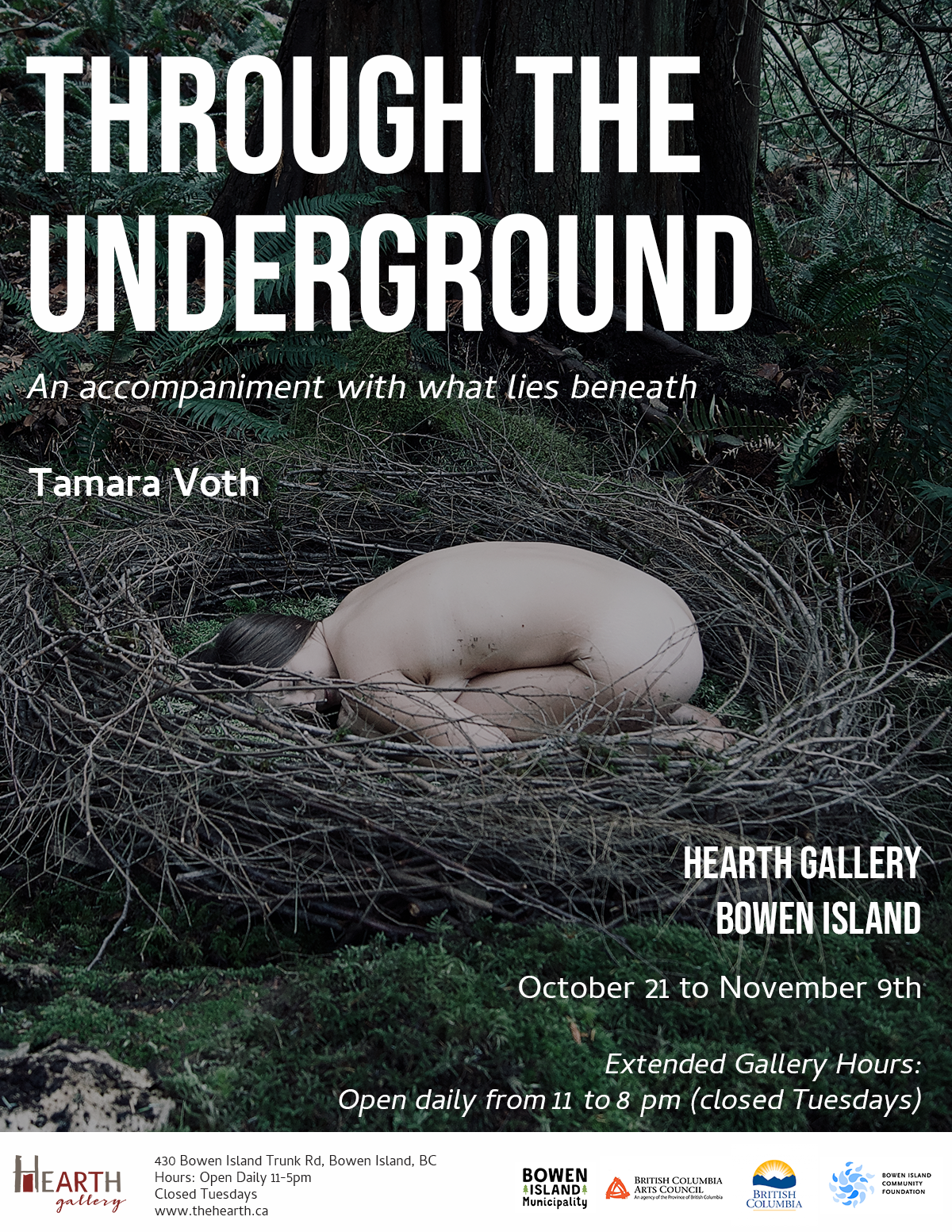
Through the Underground
An accompaniment with what lies beneath
Tamara Voth
October 21st to November 9th
ARTIST EVENTS
Artist Talk
Saturday, October 24 · 6 pmJoin Tamara for an intimate introduction to Through the Underground, followed by a short Q&A. The evening will continue with an opportunity to experience the exhibition in small groups with the artist, with time for reflection, conversation and questions.
Flower Ceremony
October 31 – November 2Throughout the day, during these sacred three days, visitors are invited to participate in a personal ceremony by placing a provided flower within the exhibition—a quiet offering in honour and remembrance of a part of self, their life, or a loved one they mourn.
Extended Gallery Hours
Open daily from 11 am – 8 pm ( Closed Tuesdays)Evening hours offer the opportunity to experience the installation in its fullest intention
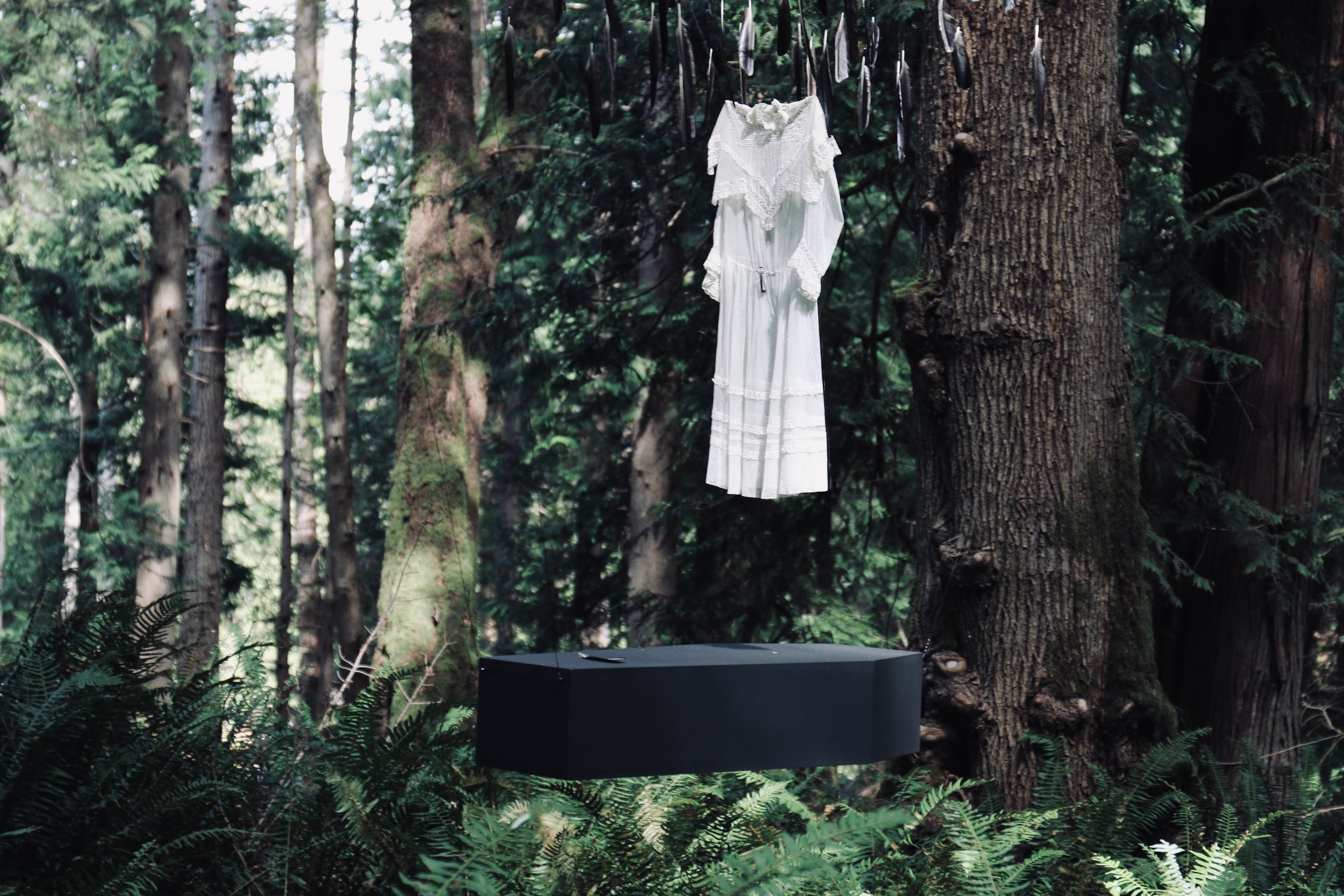
A Descent Within
A guided journey through the underground
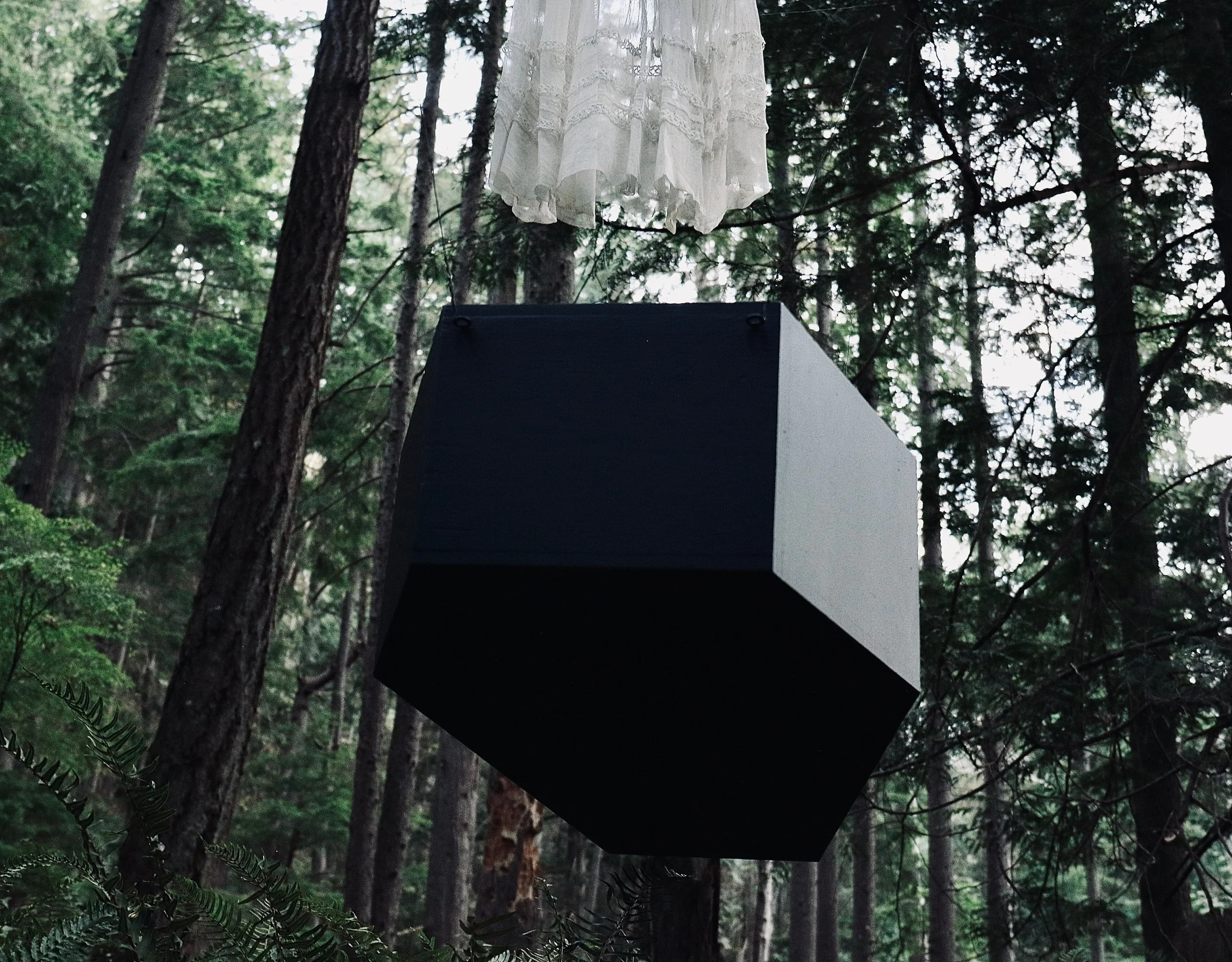
An intimate evening of gently guided artistic, reflective and somatic experience, held by candlelight within Through the Underground. This is an invitation to slow down, listen inward and be present with what lies beneath through felt sense, personal reflection and journalling.
$10 · A small ritual offering included
Registration required · a limit of 10 spots availableDate: November 3rd, at 7pm, at the Hearth Gallery
—
Through the Underground
An accompaniment with what lies beneathTamara Voth
Exhibit runs October 21st to November 9th
Hearth Gallery, Bowen Island
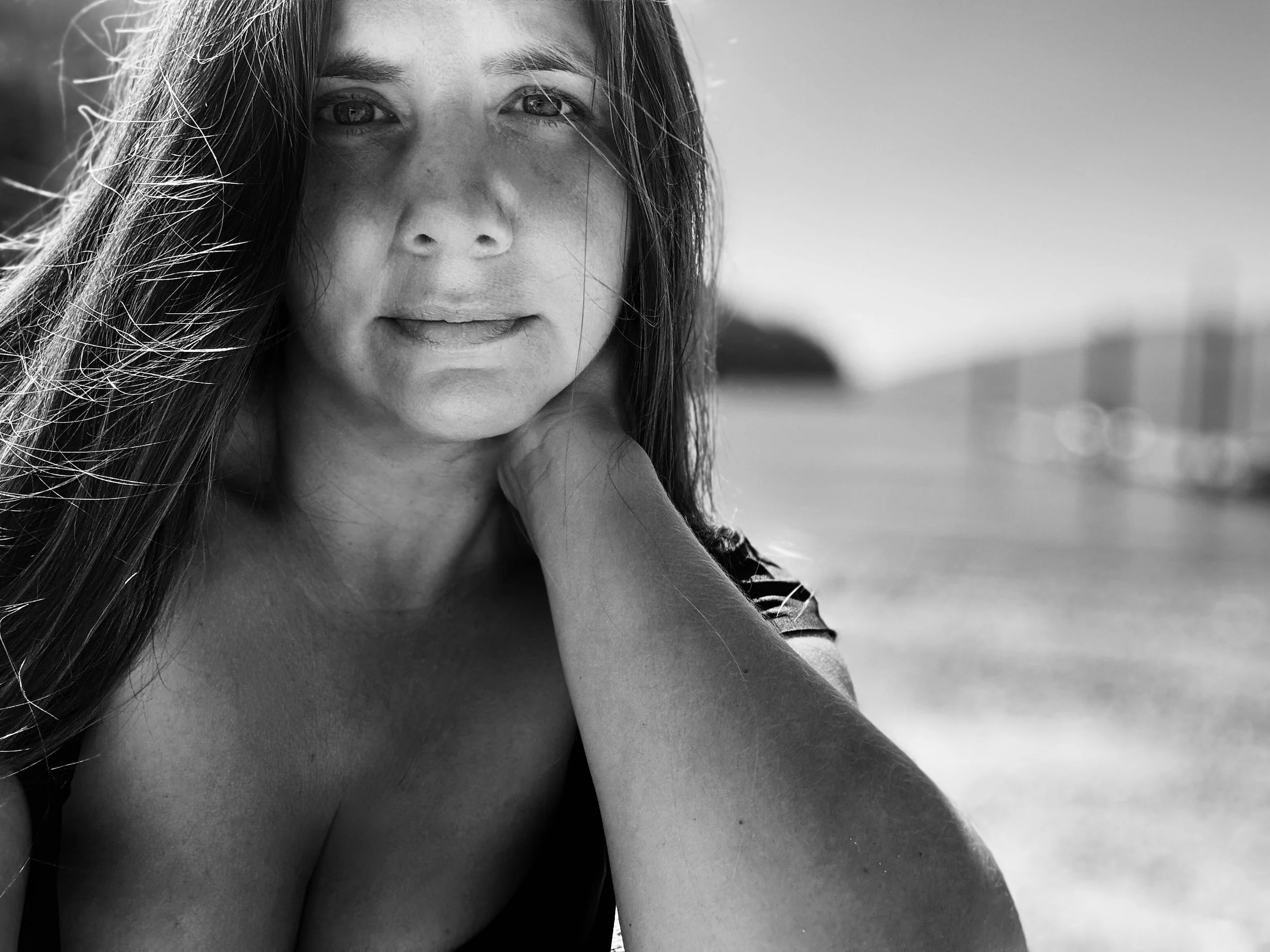
Tamara Voth is an emerging artist and writer based on Bowen Island/ Nex̱wlélex̱wem, living by the sea, amongst the trees and animals of the forest.
Through her multidisciplinary practice, she moves between mixed-media assemblage, sculptural installation, ephemeral works, writing, ritual and somatics. She gathers objects with traces of prior life—antiques, vintage textiles, wood, metal, glass and organic materials—and brings them into new relationships, allowing their histories, material qualities and symbolic associations to meet.
Weaving together fragments of the natural and symbolic world, she creates pieces that carry both history and revelation. For Tamara, this is a communing with materials and composing relationships between them, as well as with space and time. Her methodology is one of being a conduit, listening and feeling for what emerges.
Her work is nuanced and layered, created within the liminal spaces between the otherworldly and the physical, often carrying an essence of elegant darkness. Through symbolism and mystique, she meets grief, trauma and healing through a mythological lens, giving form to experiences that move between the visible and unseen. Her life's experiences are integral to this process, informing how she encounters material, memory and story.
Alongside her artistic practice, her relationship with writing and story began, with poetry and myth becoming enduring ways through which she experiences, explores and gives language to the inner world. Her practices in art, writing and somatics have developed in relationship with one another through years of deep study and practice in somatics, attachment, trauma, grief, parts, shadow and archetypal work.
These have become ways of listening to and making sense of the body, psyche and the experiences that shape us. As a neurodivergent person, Tamara experiences the world deeply and has a rich imaginative inner world, noticing connections, details and subtleties. Much of her sense of connection comes through animals, the natural world and books. Living in relationship with the rhythms of the seasons and lunar cycles is intrinsic to how she understands being in the world.
Tamara studied sculpture and book arts at Emily Carr University of Art and Design, as well as textile and bookbinding at the Maiwa School of Textiles.
Tamara has exhibited in group exhibitions at The Hearth Gallery and Silk Weaving Studio, including The Hearth Mini Art (2022, 2023, and 2025), Woven Together (2021), WILD (2023) and Eri Explorations (2024).
Through the Underground has been developing since 2018 and brings together many of the threads that have woven through Tamara's artistic practice, writing, somatics and life's story.
ABOUT
ARTIST STATEMENT
When I first conceived Through the Underground, I knew it would be a descent. I imagined entering the shadowed places where wounds, grief and what had been buried might be waiting. What I didn't anticipate was that before I could reach the wounded parts, I would first have to encounter the protective structures that had formed around them.
These structures were developed from ways I have learned to survive, to receive and maintain connection, love and belonging. Some of them had protected me, while also creating new forms of suffering. As I slowly lifted the veil around each one, both internally and through the physical pieces I was making, I began to see them differently. I began to feel how they had been born out of love and survival, from a younger self trying so hard to keep me safe.
I began asking, How have these structures been trying to protect me? That opened into another question: What were they trying to protect so faithfully?
That question unveiled the Chamber of Mourning.
The six protectors—Formation, Shame, Brace and Bear, Vigilance, Isolation and Bondage—had been protecting her: the little girl beneath them, the one who had no adaptations yet. I felt a deep grief for who she had not been able to be, for the life that had not been able to unfold freely beneath all the layers, and for what that had cost her. She was protected so carefully that she stopped being lived. Mourning became where I could meet what was being protected.
As I stayed with these parts, my relationship with them changed. They became parts I no longer wanted to exile, but parts I wanted to hold compassionate presence for, and to offer forgiveness and even gratitude. I began to understand that turning toward them was not about exiling them. It was about witnessing how and why they formed, what they carried, what they were protecting, and what had always remained beneath them.
Alongside the question of what they were protecting, another question emerged: What do the protectors need in order to feel safe enough? Through staying with them, I began to understand that what they need is presence. That understanding continues to unfold in practice, as I learn how to offer that presence. Within all of that, even within the darkest darkness of the underground, I began to sense something that had never disappeared and that still lived inside me. It only waited to be met with presence and re-membered.
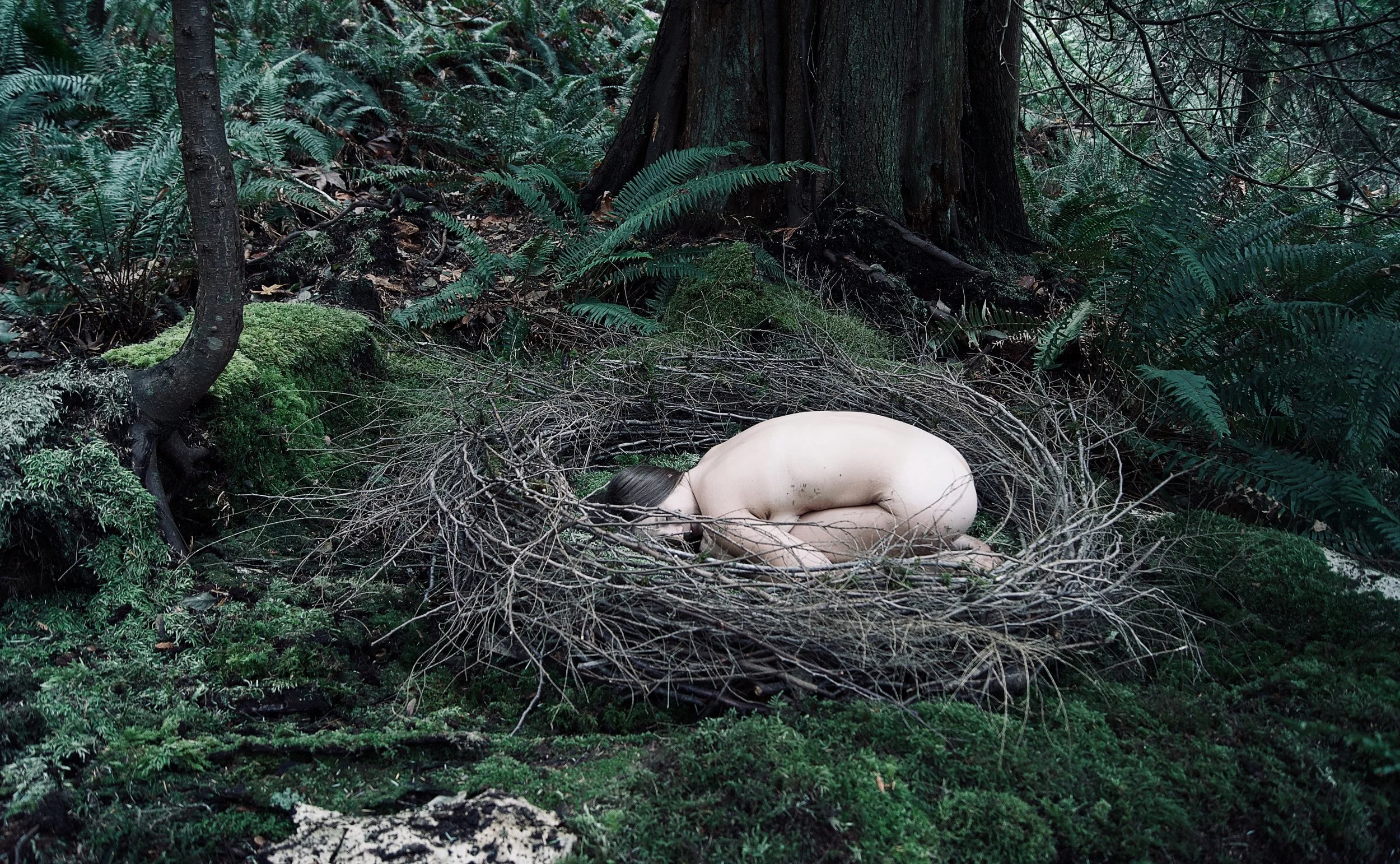
The first seed of this exhibition came in 2018, when I built a life-sized nest in the forest on the property where I have lived on Bowen Island. I laid myself within it, bare and vulnerable. I didn't know then what the exhibition would eventually become, but the underground, the descent, the nest and what happens beneath the visible surface had already begun speaking to me. Eight years later, the nest has returned, but it is no longer large enough to hold my body. Within it rests a sphere, holding my soul's essence—what has always remained beneath the layers of adaptation.
The island has been a witness and held sanctuary to the evolution of this work. I came here thinking it might be a place of healing; instead, it held me while identities fell away, my understanding of myself and my life unraveled. It has given me a place where I have been able to listen closely—to the land, to materials, to memory and to myself.
I have been creating this exhibition while walking through the underground myself, during the most challenging period of my life, including profound personal losses and a life-altering health condition. Those experiences are not the subject of all seven chambers, but they have shaped and deepened the work. They changed my relationship with my own body, my internal and external connections, what it means to remain present when it is hard, as well as my relationship to the work and how I create.
Making Through the Underground has also clarified something about my artistic practice that I had been living without fully being able to name. I have come to understand that my medium is connection. The meaning in my work often exists between an object and its relationship with memory, material, the body, space, myth, ritual, other objects and my own experience. I don't necessarily want to alter an object beyond recognition. I want to allow its integrity and presence to remain visible while shifting its relational composition—what it is beside, what it holds, what holds it, the space around it, and the associations that begin to emerge between them.
My process is rooted in slow, quiet attention, intuitive listening, and memory. I observe, I listen, I trust, I gather, I place things into relationship, I wait, and eventually what is emerging is unveiled to me. Sometimes I understand a relationship immediately. Other times it only reveals itself years later.
I am interested in the places where something is not yet fully known, where an object can carry a history or meaning we cannot immediately, or perhaps ever, name. I want to create spaces where those things can be encountered. The word through describes a way of moving. To me, it does not mean conquering what is encountered or arriving at a perfected place on the other side. It is about how it is moved through—with presence, in relationship and with compassionate accompaniment. There is something in the word through that implies remaining with: I will go through it with you while it hurts. I am here. I am staying.
The exhibition has taught me that love is not the absence of hardship. Love is what remains present with it. And that begins with self: turning toward the parts that are most difficult to love, saying, “You don't have to carry this by yourself anymore. Even in your darkest hour, I am not leaving,” becoming the person the protectors can trust so they can begin to feel safe enough to rest.
The ritual boxes grew from this same sentiment. I wanted to offer a continued experience of presence in ritual form, with elements that have accompanied and sustained me through my own journey through the underground on this island.
From October 31 to November 2, viewers who feel called are invited to place a flower within the exhibition in memory or honour of a part of themselves, a part of their life, or someone they mourn or wish to remember. This is my own ceremonial invitation within the work: a small act of remembrance, presence and accompaniment. As the viewer moves through the exhibition, each chamber offers a reflection question—an invitation to pause with their own relationship to what they may be carrying, protecting, resisting, or longing to be met. At the end, a reflection card is offered as a way to carry these contemplations beyond the gallery and sit with them in one's own time. These questions grew from my own process of turning toward the protective parts of myself and listening to what was asking to be witnessed.
Through the Underground has become an initiation for me as much as an invitation to the viewer.
My hope is that this work offers a place to stay with what has been carried, what has protected, what has been mourned, and to re-member what remains beneath the adapted layers: our soul’s essence. A place where presence can be felt, and where we might feel that even within the underground, we are not alone: earth below, sky and above.